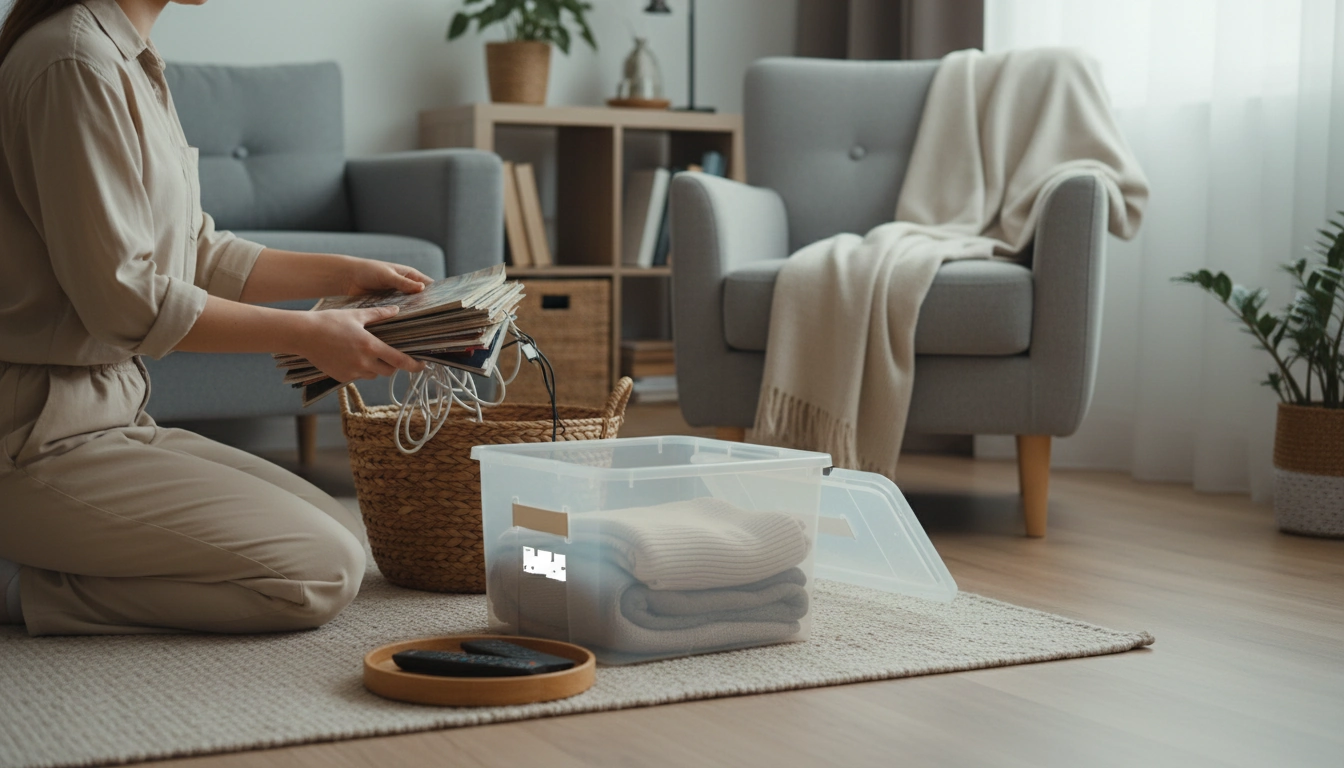
When your home feels “stuck,” the fastest way forward is to stop trying to fix everything at once and use a simple, repeatable sequence. Start by choosing one visible “landing zone” (kitchen counter, coffee table, entry bench) and make that your first win. Clear only obvious trash and recyclables, then return items that already have a home. If something doesn’t have a home, place it in a small “decide later” bin so you can keep momentum without getting derailed.
Set a 10–15 minute timer and work in one space only. This reduces decision fatigue and prevents the common mistake of pulling everything out and making a bigger mess. When the timer ends, stop and do a quick surface wipe so the area looks finished.
As you pick things up, sort into: Keep (stays here), Put Away (belongs elsewhere), and Donate/Trash. Keep the categories physical—three bags or bins—so you don’t create new piles on the floor.
Prioritize spots that affect your daily flow: entryway, kitchen sink, dining table, and the walkway through living spaces. A clear path instantly makes a home feel calmer, even if closets and drawers aren’t perfect yet.
Identify the items that keep reappearing (mail, chargers, kids’ stuff, hair tools) and assign each a small container near where it’s used. This prevents the same clutter from migrating back to countertops.
End by emptying the trash, taking donation bags to the car, and doing a two-minute “restore” of surfaces. For more practical reset ideas and a step-by-step flow, visit this quick home reset guide.
Give the most common “drop zones” a dedicated container and do a five-minute nightly reset to put items back in their homes. Limiting duplicates (like extra cords or random mail) also reduces repeat buildup.







Leave a comment