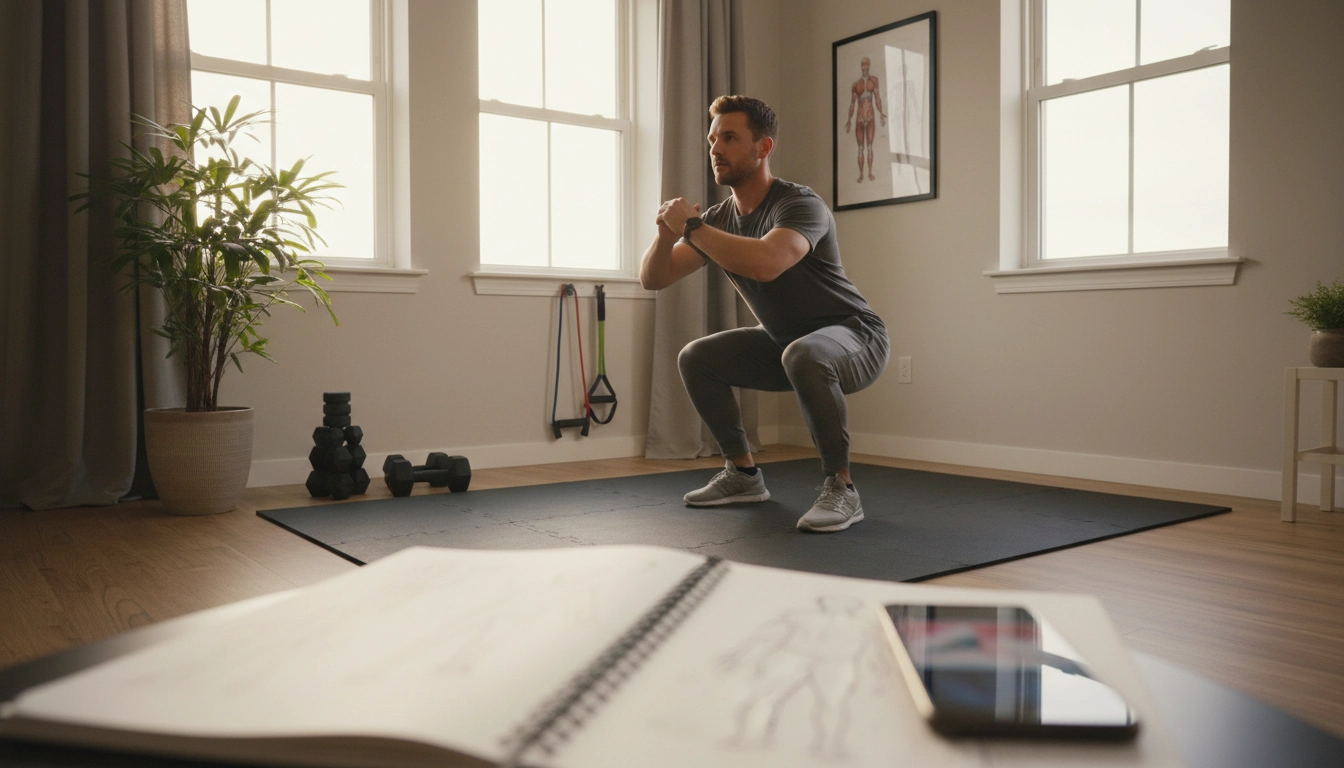
The best way to start strength training after 30 is to keep it simple, joint-friendly, and consistent: begin with 2–3 short full-body sessions per week, focus on clean form, and progress slowly. Early wins come from mastering basic movement patterns (squat, hinge, push, pull, carry, and core bracing) rather than chasing heavy weights or complicated routines.
Start with two full-body workouts on nonconsecutive days (for example, Monday/Thursday). If energy and recovery feel good after 2–3 weeks, add a third day. Keep sessions to 25–40 minutes so it’s easy to repeat.
A strong beginner template looks like: a squat variation (goblet squat or sit-to-stand), a hinge (Romanian deadlift with light dumbbells), a push (incline push-up or dumbbell bench), a pull (one-arm row or band row), a carry (farmer carry), and a core move (dead bug or plank). Do 2–3 sets of 6–12 controlled reps for most lifts, stopping with 1–3 reps “in the tank.”
Use a 5-minute warm-up (brisk walk, hip hinges, shoulder circles), lift at a pace you can control, and avoid painful ranges of motion. Mild muscle fatigue is normal; sharp joint pain is not. If something pinches, reduce the load, shorten the range, or swap the exercise.
Only change one variable each week: add 1–2 reps, a small amount of weight, or an extra set. Consistency beats intensity, especially when balancing work, stress, and sleep.
For a joint-friendly weekly plan you can follow and repeat, see the full guide here: Sustainable Strength After 30: A Joint-Friendly Weekly Plan.
Many beginners notice better energy and posture in 2–4 weeks, with visible muscle and strength changes often showing up around 8–12 weeks. The biggest driver is sticking to a simple plan and gradually increasing challenge.







Leave a comment