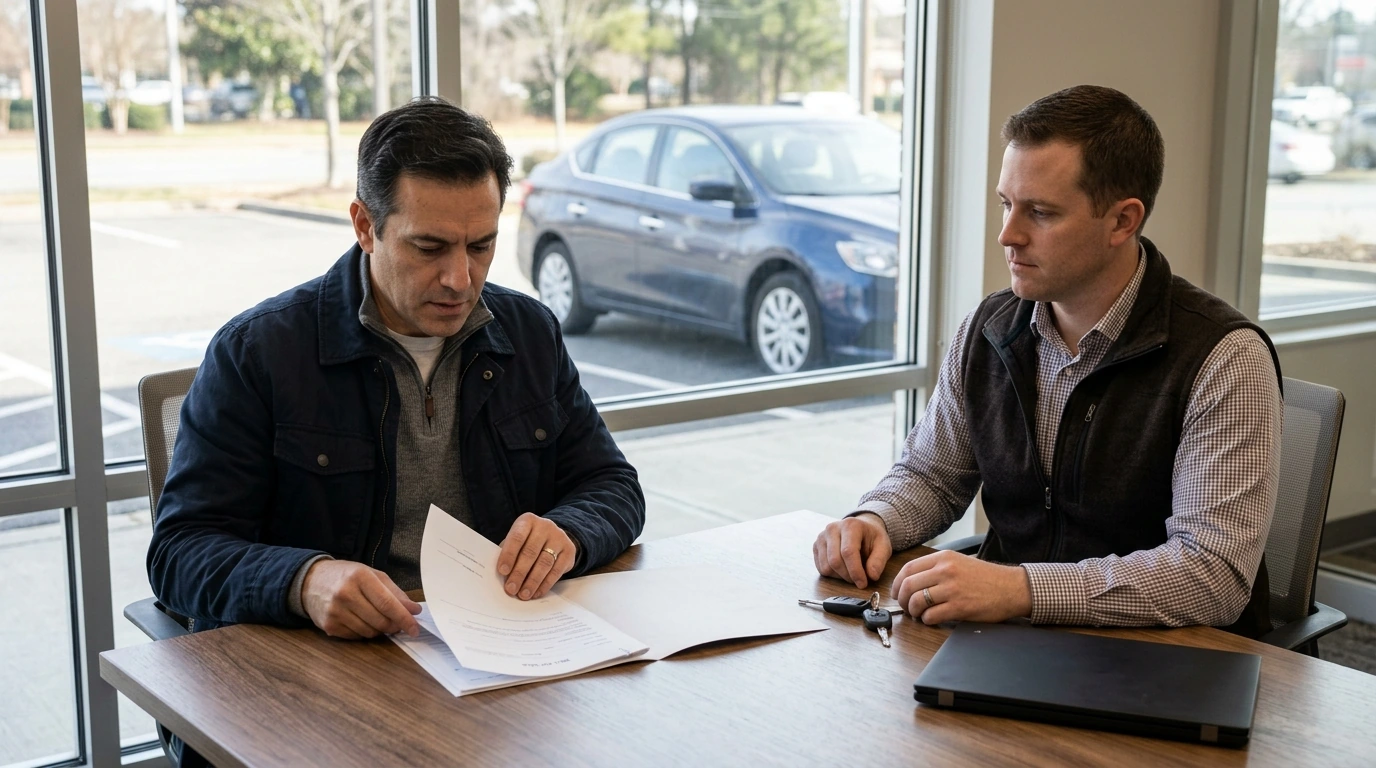
Car deals move fast—especially private-party sales, marketplace listings, and out-of-state purchases. The fastest way to lose money is to rush payment before ownership and condition are verified. Escrow can add a layer of protection by holding funds until both sides complete agreed steps, but it’s not always necessary. Our team put this guide together to show you when escrow is worth the cost, what a secure escrow-style workflow looks like, and the checkpoints that keep a “good deal” from turning into an expensive lesson.
A secure transaction protects three things at the same time: your money, the vehicle, and the legal transfer of ownership (title, bill of sale, lien status). Most scams and messy disputes happen because one of those three is handled last—usually title verification or physical possession.
The safest workflow makes payment conditional. That means funds move only after you have clear proof of vehicle identity (VIN), ownership, and the handoff terms you agreed to. Escrow is one way to enforce those conditions; in some situations, a bank, dealership, or in-person title office transfer can accomplish the same goal.
Escrow is a third party that holds the buyer’s funds until the agreed conditions are met—inspection completed, title signed, vehicle delivered, and so on. The key is that the buyer and seller agree up front (in writing) on the conditions and deadlines.
A legitimate escrow process won’t rush you into sending irreversible payments to random accounts, and it will provide verifiable company contact details and published terms. Even then, escrow is not a substitute for confirming VIN details, checking lien status, and verifying seller identity—it simply reduces the chance that money moves before proof does. For scam awareness basics, the Federal Trade Commission’s guidance is a solid starting point: How to Avoid a Scam.
Escrow earns its keep when you have less control over inspection, title verification, and handoff timing. If you can’t be present for the critical steps, escrow (or an escrow-like conditional payment plan) can prevent “pay first, hope later.”
| Method | Best for | Key protection | Main risk | Good fit for escrow? |
|---|---|---|---|---|
| Cash (in person) | Local deals at a bank/DMV | Immediate exchange | Counterfeit cash, robbery risk | No—use safe meeting + verification instead |
| Cashier’s check | Local deals with signed title | Paper trail, bank verification | Fake checks, delayed discovery | Sometimes—if seller insists on pre-delivery |
| Wire transfer | Fast settlement | Speed | Irreversible if sent to a scammer | Yes—if escrow controls release conditions |
| ACH / bank transfer | Lower-cost transfer | Bank-to-bank trail | Can still be misdirected | Yes—if escrow receives funds securely |
| Peer-to-peer apps | Small deposits | Convenience | Limited dispute options for vehicles | Not ideal—avoid for full payment |
| Escrow service | Remote/high-risk transactions | Conditional release of funds | Fake escrow, unclear terms, fees | Yes—when conditions are written and verified |
For VIN-based checks that can support your verification step, you can also use NHTSA’s recall lookup and NICB VINCheck (helpful for theft/fraud indicators).
Escrow can be safe when it’s a legitimate provider and the release conditions are clearly written and verified. The biggest danger is fake escrow websites or link-based impersonation, so you should independently verify the escrow company and the exact steps required before any funds are deposited.
Escrow fees are negotiable: the buyer may pay, the seller may pay, or you can split the cost. Agree on the fee responsibility in writing before the transaction starts and make sure the fee schedule matches the escrow provider’s published terms.
Meet at a bank or DMV/title office, verify the seller’s ID and the title/VIN match, then complete the title paperwork before final payment is handed over. A cashier’s check issued at the bank during the meeting (or a verified on-the-spot transfer) helps reduce fraud compared to sending money in advance.






Leave a comment