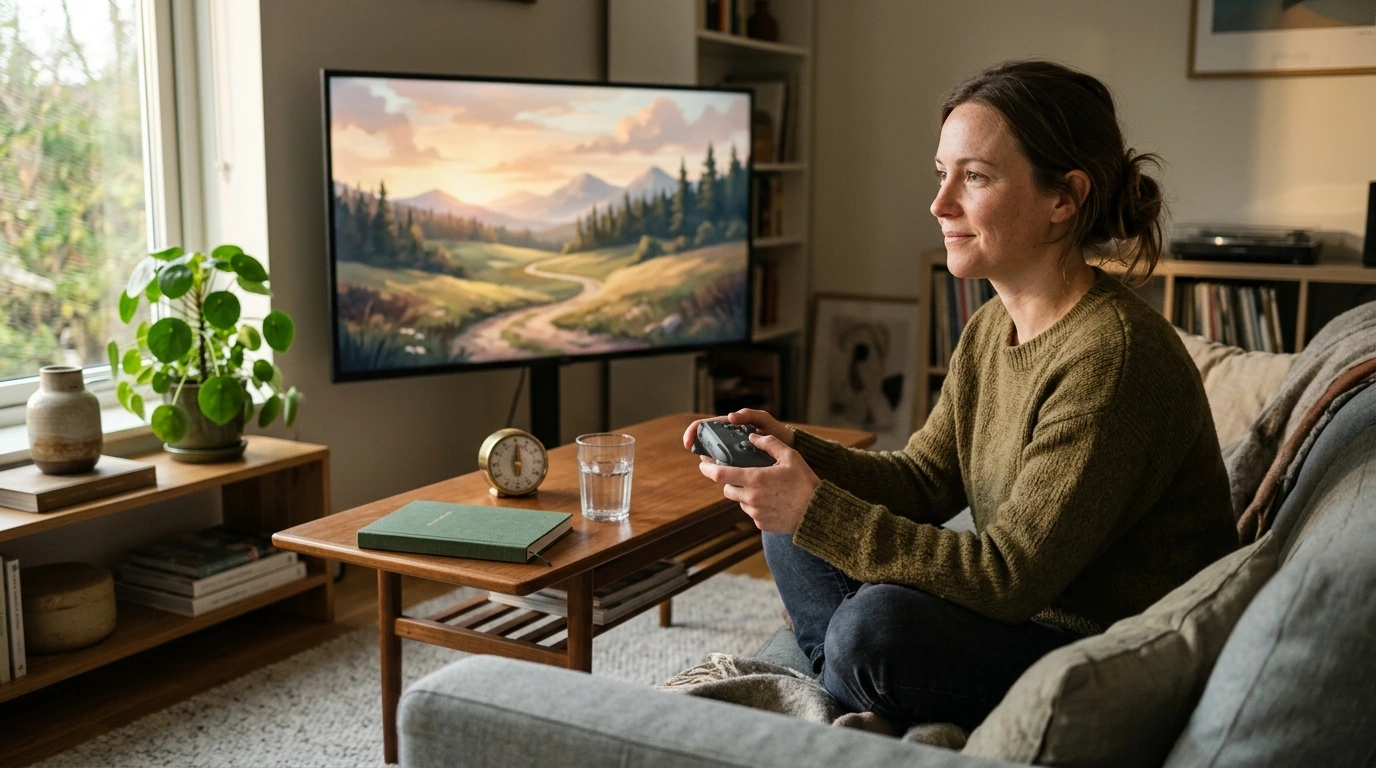
Video games are often framed as a guilty pleasure, but used intentionally they can become a practical tool for stress relief, sharper thinking, and better emotional regulation. The goal isn’t “more gaming”—it’s better gaming: choosing the right experiences, playing with boundaries, and using small habits that turn play into steady support for mental well-being.
Our team focuses on routines you can actually stick with: short sessions, clear stopping points, and game choices that match what you need today. For a deeper, step-by-step approach, we keep How Video Games Can Boost Mental Health: A Practical Guide to How Video Games Can Improve Mental Health, Cognitive Benefits, Anxiety Relief, and Healthy Gaming Routines in stock as an easy reference you can return to whenever your mood, schedule, or stress level changes.
Healthy gaming supports your daily life rather than replacing it. That means sleep, meals, movement, and relationships stay protected even when a game is exciting. Instead of launching something on autopilot, pick a game that matches the outcome you want right now: calm, connection, challenge, or focus.
Boundaries work best when they’re simple. Use start/stop rules: plan a session length, decide a clear stopping point (end of a match, after one quest, at a save), and add a short wind-down. Most importantly, learn the difference between recovery play (you feel calmer after) and avoidance play (you feel more tense, rushed, or guilty after).
| Signal | Recovery play tends to | Avoidance play tends to |
|---|---|---|
| Mood during play | Feel steady, curious, or gently engaged | Feel edgy, numb, or compulsive |
| After the session | Return to tasks more willing and clear-headed | Feel behind, irritated, or foggy |
| Body cues | Relaxed shoulders, easier breathing | Jaw clenched, shallow breathing, tense posture |
| Time awareness | Stops close to the plan | Runs long “without noticing” |
| Next-day effect | Sleep stays intact | Sleep gets delayed or restless |
Many games train rapid information processing: tracking goals, adapting to changing conditions, and learning patterns quickly. Strategy, puzzle, and simulation titles can also build planning skills by forcing you to prioritize tasks, manage limited resources, and evaluate trade-offs instead of reacting impulsively.
Co-op play adds another layer: communication under pressure. Clear callouts, role clarity, and shared decision-making are real skills—especially when you keep the stakes low and the tone supportive.
A practical approach we recommend is rotation: keep one “challenge” game (problem-solving, planning) and one “recovery” game (calm, predictable) in your weekly mix. This prevents burnout and helps you use games like tools, not defaults.
If you want to pair gaming with self-awareness, our team also recommends Discover Your Strengths in the Age of Smart Tools | Digital eBook for Personal Growth, Self-Awareness & AI Coaching—because knowing your strengths makes it easier to choose game styles that leave you energized instead of drained.
Predictable, low-stakes gameplay can reduce mental noise by giving your brain one manageable focus. Calming loops—farming, building, exploration, gentle rhythm, tidy-up tasks—often pair well with slow breathing and relaxed posture so your body gets the “we’re safe” signal too.
For more background on gaming and well-being, you can review the American Psychological Association’s overview here: https://www.apa.org/topics/video-games.
If you want to reinforce the “movement helps” side of mental health, a simple trick is making breaks more inviting: stand up between matches, refill water, and take a quick lap. Comfortable everyday footwear can make that easier to follow through on; we keep New Balance BBW550 Pink Sneakers in stock if you want a practical option that supports short walks and reset breaks.
For additional research context on time spent gaming and well-being, Oxford Internet Institute findings are a useful reference point: https://www.oii.ox.ac.uk/.
If you want a structured, no-drama approach, How Video Games Can Boost Mental Health lays out clear ways gaming can support cognitive strength, anxiety relief, and healthier routines—without turning play into another pressure-filled self-improvement project. You can use it like a reference: start with the section that matches today’s need (stress relief, focus, habit-building) and add one routine at a time.
Yes, especially when you choose low-stakes, predictable gameplay that reduces rumination and gives your attention a single manageable focus. Short sessions paired with calming body cues (slower breathing, relaxed shoulders) tend to work better than long, intense play. If anxiety feels persistent or severe, professional support is worth seeking alongside self-care habits.
Many people do well with 10–30 minutes for recovery play and 30–60 minutes for challenge or learning sessions, as long as sleep and responsibilities stay protected. The best session length is the one that improves your mood and doesn’t create next-day fallout. Using a timer and stopping at a natural breakpoint makes consistency much easier.
Common warning signs include sleep disruption, irritability, time-blindness, neglecting basics (food, water, movement), and feeling worse—tenser or guiltier—after you stop. If you notice these, reduce intensity, add cutoffs, switch to calmer modes, and rebuild short sessions with clear stopping points. If the pattern feels hard to control, reaching out for support is a strong next step.




Leave a comment