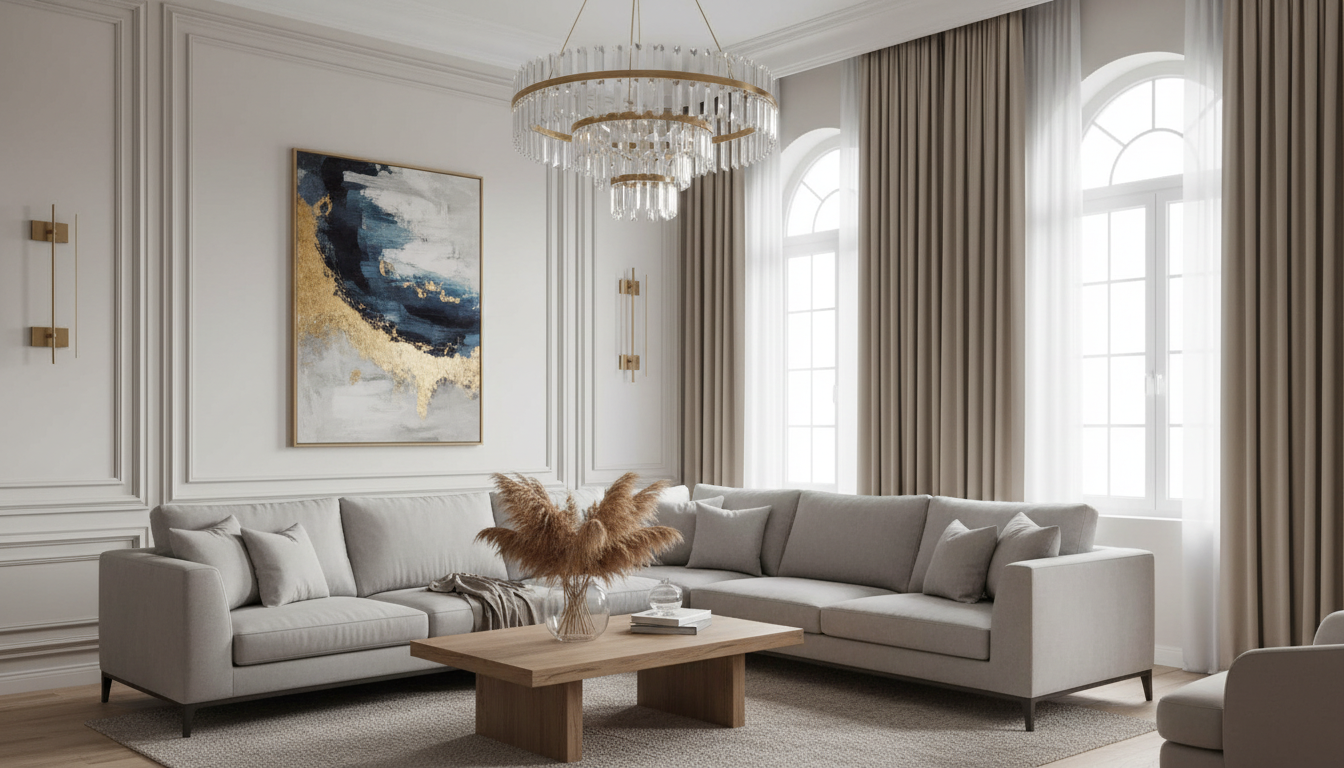
When you’re pulling a room together, the difference between “nice” and “finished” usually comes down to a few fundamentals. Our team leans on seven basic interior design principles to help you choose furniture, lighting, and decor that look intentional, feel comfortable, and function for real life. If you want a step-by-step planning companion, you can also use our luxury interior design checklist to translate these principles into a shopping and styling plan.
Balance is how visual weight is distributed. Mix larger anchor pieces (like a sofa or bed) with medium pieces (chairs, nightstands) and smaller accents (lamps, objects) so one side of the room doesn’t feel “heavier” than the other.
Proportion is how each item relates to the room itself. A common win: choose a rug large enough that key furniture legs sit on it, and select lighting scaled to the surface below (for example, substantial lamps for substantial consoles).
Scale focuses on size relative to other items nearby. Pair a large sectional with a larger coffee table or two nested tables; in a smaller space, use slimmer profiles and open bases to keep the layout breathable.
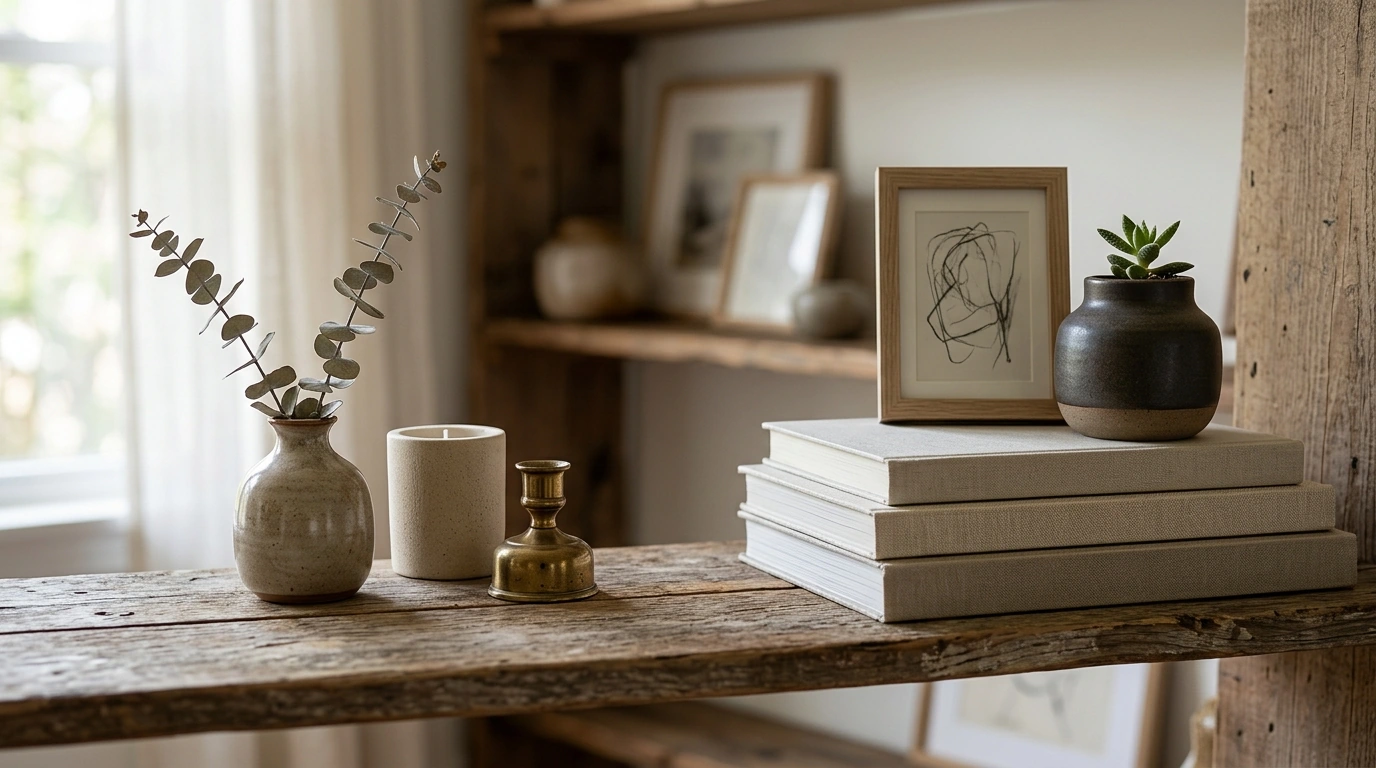
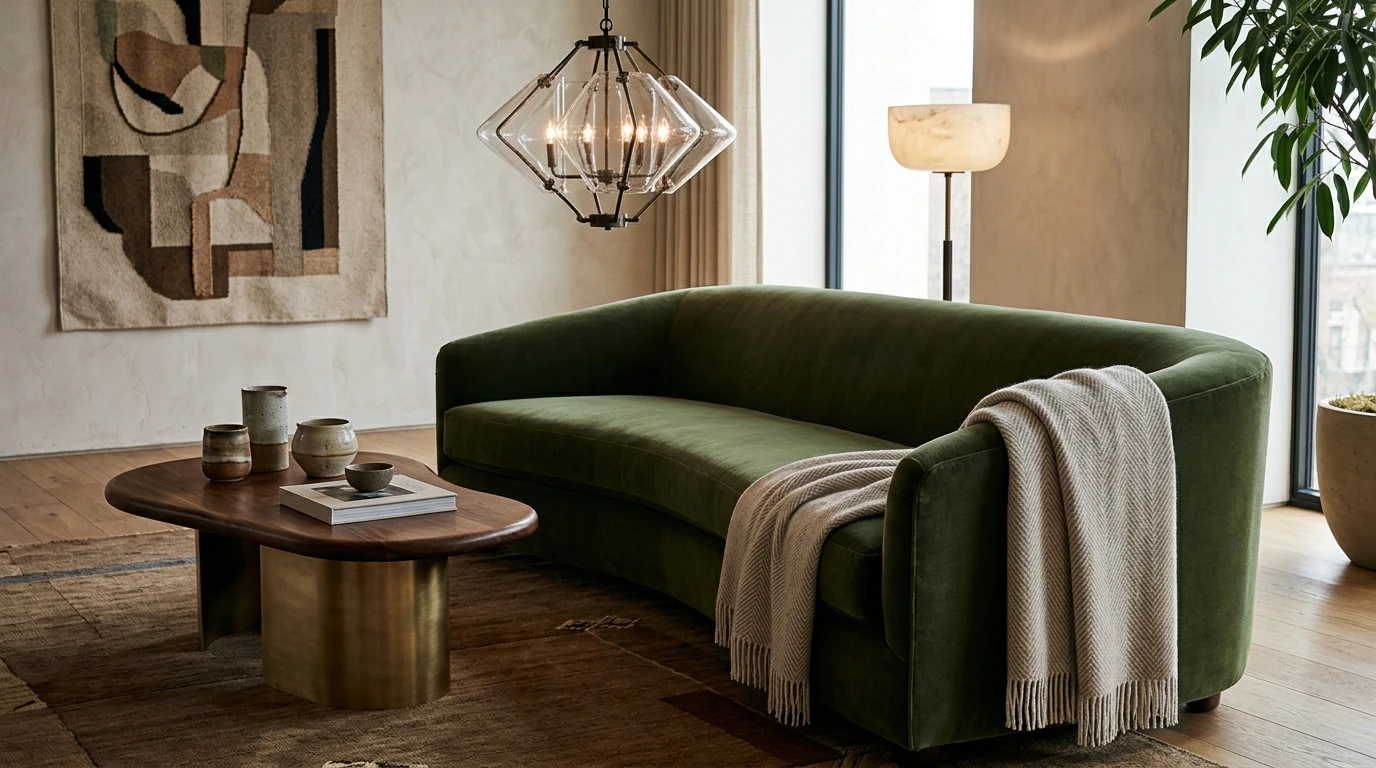
Rhythm guides the eye through repetition and pattern. Repeat a finish (brass, black, chrome), a shape (arches, cylinders), or a color in 3+ spots—like hardware, a lamp base, and a frame—for a cohesive flow.
Emphasis creates a focal point. Choose one star—an oversized mirror, sculptural chandelier, or statement headboard—then keep surrounding pieces quieter so the focal point reads as deliberate, not chaotic.
Contrast adds energy and clarity. Combine smooth with textured (velvet + wood), light with dark (ivory + espresso), and shiny with matte (polished metal + stone) to prevent the space from feeling flat.
Harmony makes the room feel like it belongs together. Limit your core palette and finishes, then vary shapes and textures so everything relates—without looking matchy.
Start with a clear plan for function and flow, then choose a cohesive palette and repeat it consistently. If you can walk through the space easily and your key finishes appear throughout, the room will feel pulled together.



Leave a comment