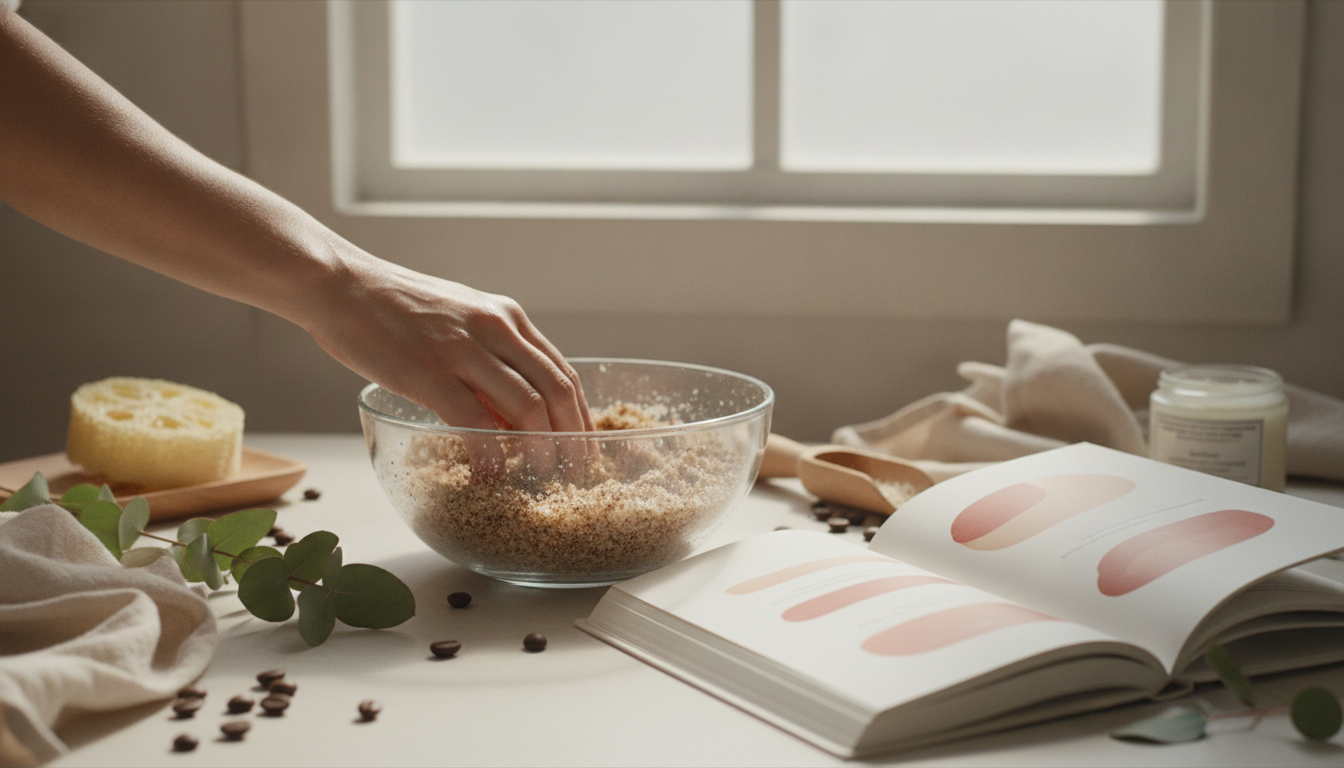
Body exfoliation helps lift away dull buildup so skin can feel softer, look brighter, and absorb moisturizer more evenly. The key is choosing the right exfoliant for your skin type and using it on a steady schedule—enough to see results, not so much that your barrier feels stripped. Below is a practical guide to what exfoliation does, how to do it safely, and a simple routine that fits real life.
For dermatologist-aligned safety reminders, the American Academy of Dermatology Association emphasizes gentle techniques and avoiding overdoing it—especially if you’re prone to irritation.
Physical exfoliation uses friction to lift surface flakes. It can be effective, but technique matters: use light pressure, keep strokes short, and avoid anything that feels scratchy. Rounded particles and soft cloths tend to be more comfortable than gritty, sharp-textured scrubs.
Chemical exfoliation uses ingredients that loosen the bonds between dead skin cells so they release more evenly. Common options include AHAs (like lactic or glycolic acid) for dryness and roughness, and BHAs (like salicylic acid) for clogged pores and body breakouts. For sensitive skin, keratosis pilaris-prone areas, or frequent ingrown hairs, chemical exfoliants can be easier to control than vigorous scrubbing.
Whichever type you choose, too much can backfire. Stinging, tightness, increased dryness, or patchy redness are signs to scale back. The Cleveland Clinic recommends keeping exfoliation gentle and consistent rather than aggressive.
| Skin type / concern | Suggested exfoliant | Frequency | Notes |
|---|---|---|---|
| Dry, flaky | Gentle AHA (lactic) or very mild scrub | 1x weekly | Moisturize immediately after; avoid hot showers. |
| Sensitive, easily irritated | Low-strength AHA or enzyme; soft cloth | Every 10–14 days | Patch test; keep pressure minimal. |
| Keratosis pilaris (rough bumps) | AHA (lactic/glycolic) + consistent moisturizer | 1–2x weekly | Avoid harsh scrubs that inflame follicles. |
| Ingrown hairs / shaving bumps | BHA (salicylic) or gentle AHA | 1–3x weekly | Exfoliate on non-shave days; don’t scrub over irritated skin. |
| Body acne-prone | BHA cleanser or leave-on BHA | 2–3x weekly | Rinse sweat promptly; use non-comedogenic moisturizer. |
If dryness is a recurring issue, basic barrier-friendly habits (lukewarm water, gentle cleansing, consistent moisturizing) can make exfoliation noticeably more comfortable. The Mayo Clinic highlights these foundations for managing dry skin.
If you prefer a compact routine with clear steps, frequency suggestions, and quick do/don’t checklists, A Clear Guide to Body Exfoliation Basics | Simple Skincare eBook for Glowing Skin, Body Exfoliation Basics Explained organizes exfoliation methods, schedules, and practical tips in one place.
To make consistency easier, pairing a skincare routine with a simple habit-building approach can help you stick with your schedule long enough to see results. Discover Your Strengths in the Age of Smart Tools | Digital eBook for Personal Growth, Self-Awareness & AI Coaching | Learn How to Use AI to Discover My Strengths is a supportive option for structuring self-care goals and keeping routines realistic.
Take a warm shower for 3–5 minutes, cleanse with a gentle body wash, then exfoliate with light pressure (or apply a low-strength AHA/BHA). Rinse thoroughly, moisturize immediately on slightly damp skin, and use SPF on exposed areas; repeat 1–2 times weekly based on tolerance.






Leave a comment