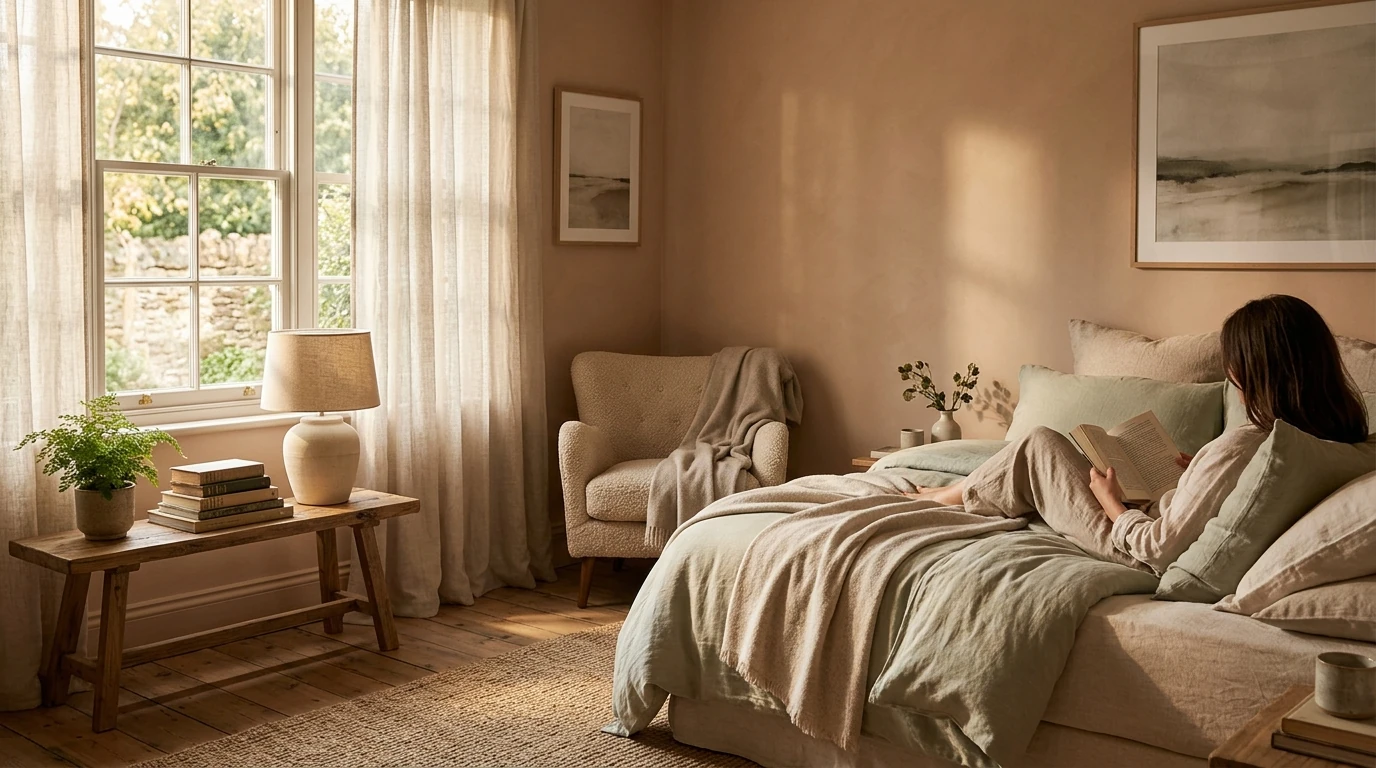
A bedroom should feel effortless the moment you walk in: calm, functional, and tailored to how you actually live. Our team relies on seven design rules that work across styles—from modern glam to minimal—because they prioritize comfort, flow, and a polished finish.
Decide what your bedroom must do besides sleep (reading nook, getting-ready zone, work corner), then design around that. This prevents clutter and keeps every piece earning its footprint.
Place the bed on the strongest wall (usually opposite the door) so it reads as the focal point. Choose a headboard that gives visual weight and comfort, then scale nightstands to sit close to mattress height.
Plan for easy movement: leave comfortable walkways around the bed and clear access to closets and drawers. If space is tight, use slimmer nightstands, wall-mounted sconces, or a storage bed to reduce bulk.
Use a trio: ambient light for the whole room, task lighting for reading/getting ready, and accent lighting for mood. Dimmer switches and warm color temperatures help the room wind down at night.
Pick a small palette—often a neutral base with two supporting tones—then repeat it across bedding, rugs, and decor. This creates a cohesive look and makes upgrades simple season to season.
Mix materials to add depth without visual noise: crisp sheets, a plush throw, upholstered accents, and a rug that feels good underfoot. Texture is the shortcut to “luxury” even in minimal spaces.
Limit surfaces to a few intentional pieces and protect calm with concealed storage. Dressers with deep drawers, bedside storage, and trays to corral essentials keep the room looking designed, not busy.
For a broader, room-by-room approach to elevated interiors, explore our guide: luxury interior design checklist.
A common choice is a rug large enough to extend beyond both sides and the foot of the bed so you step onto softness when getting up. In smaller rooms, a runner on each side can add comfort without crowding walkways.





Leave a comment